
100+ Famous Nicknames for Alaska Cities and Towns: The Hidden Stories Behind Each Name
Alaska isn’t just the largest state in America — it’s the wildest storybook.
Each city and village carries a name etched by ice, wind, and memory. From the gold-laced rivers of Fairbanks to the seal-hunting shores of Togiak, Alaskan nicknames reveal deep ties to land, heritage, and humor.
In this epic guide, we explore over 100 Famous Nicknames for Alaska Cities and Towns, weaving history, legend, and local charm into one unforgettable journey.
Nicknames for Alaska Cities and Towns
Anchorage – “The Big Apple of the North”
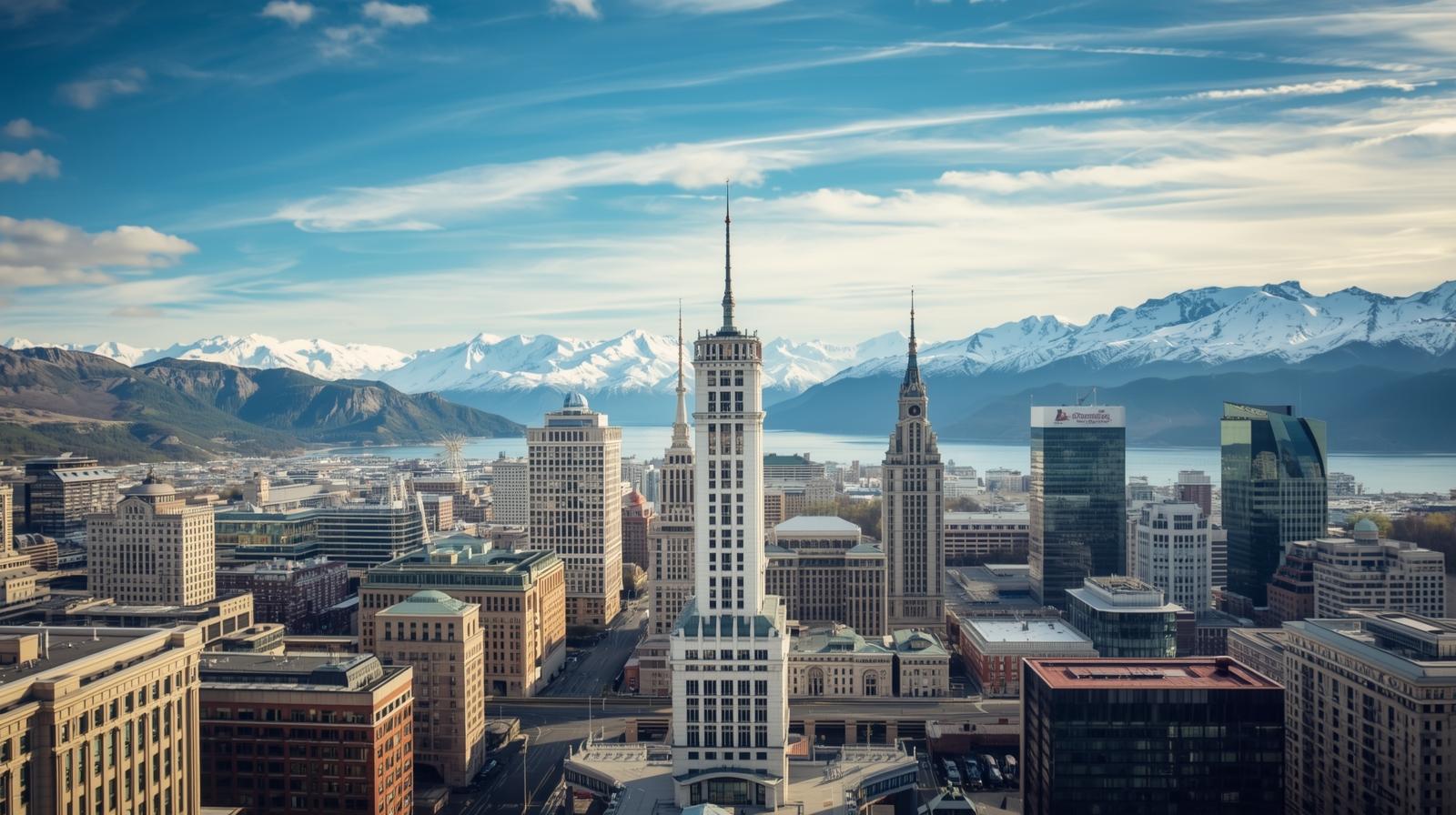
Anchorage began as a humble construction camp for the Alaska Railroad in 1915. Over the decades, it transformed into Alaska’s largest and most bustling city — where modern skyscrapers stand against a backdrop of snow-capped peaks.
The nickname “The Big Apple of the North” playfully mirrors New York City, celebrating Anchorage’s big-city energy surrounded by wilderness.
Fairbanks – “The Golden Heart City”
Born during the early 1900s gold rush, Fairbanks quickly became a beacon for miners seeking fortune in Alaska’s interior. Its nickname, “The Golden Heart City,” represents both its golden history and the warmth of its people who endure extreme winters with unmatched spirit. It remains the cultural heart of interior Alaska today.
Juneau – “The Capital City”
Founded by gold prospectors in 1880, Juneau grew from a mining camp into the political and administrative capital of Alaska. Accessible only by sea or air, it stands as a symbol of resilience and natural beauty — nestled between Mount Juneau and Gastineau Channel. Its nickname simply reflects its status but also its proud identity as a frontier capital.
Nome – “The Golden Heart of Alaska”
Nome exploded to fame in 1899 when gold was discovered on its beaches. Within months, tents and shanties covered the frozen tundra.
Today, the city honors that legacy through its nickname “The Golden Heart of Alaska,” representing both its historical wealth and the enduring grit of its people in a landscape that still feels untamed.
Ketchikan – “The Salmon Capital of the World”
Nestled in Southeast Alaska’s rainforest, Ketchikan earned its nickname thanks to its rich salmon runs and fishing heritage.
Founded in 1885, the town became a hub for canneries, loggers, and now tourists. Its waterfront boardwalks, colorful homes, and misty mountains make it one of Alaska’s most photographed small towns.
Skagway – “Gateway to the Klondike”
In 1897, Skagway was the jumping-off point for tens of thousands of stampeders heading to Canada’s Klondike goldfields. The town’s rough saloons, muddy streets, and legends of conmen (like Soapy Smith) made it infamous. Today, “Gateway to the Klondike” recalls those wild days of fortune-seekers and frontier spirit.
Sitka – “The First Capital of Alaska”
Sitka was the seat of Russian America before Alaska was sold to the United States in 1867.
The town’s blend of Russian Orthodox domes and Tlingit heritage gives it a unique cultural depth. As “The First Capital of Alaska,” Sitka symbolizes the state’s colonial history and the merging of Native and European traditions.
Valdez – “The Switzerland of Alaska”
Surrounded by steep, snow-covered peaks and cascading waterfalls, Valdez lives up to its picturesque nickname.
Originally founded as a gold rush port, it later became known for oil shipping and its resilience after being rebuilt from the devastating 1964 earthquake. Today, its scenery and charm make it Alaska’s alpine gem.
Kodiak – “The Emerald Isle”
Lush, green, and full of wildlife, Kodiak Island earned its poetic title “The Emerald Isle.” Once a Russian trading hub, it’s now known for the Kodiak bear — one of the largest brown bears on Earth. Its mix of stormy seas, fishing fleets, and rolling hills gives it a beauty unlike anywhere else in Alaska.
Homer – “The Halibut Capital of the World”
Perched on Kachemak Bay, Homer’s story begins with coal miners and dreamers who settled the area in the late 1800s. Today, its nickname reflects its thriving fishing industry and passion for the sea.
The Homer Spit, a long finger of land stretching into the bay, has become an iconic landmark — a symbol of the town’s connection to ocean life.
Adak – “Birthplace of the Winds”
Perched in the Aleutian Islands, Adak is often lashed by fierce gales that gave rise to its poetic nickname, “Birthplace of the Winds.” Once a bustling World War II naval station, today it’s a quiet outpost where tundra meets sea — a reminder of Alaska’s strategic importance and unrelenting weather.
Akiak – “The River Runner’s Town”
Meaning “the place founded by the river,” Akiak’s name reflects its deep bond with the Kuskokwim River. Known as “The River Runner’s Town,” it’s a vital checkpoint on the Iditarod Trail and a testament to the endurance and strength of Native Alaskan communities.
Anderson – “The Gateway to Denali”
Established as a homesteading town in the 1950s, Anderson sits just south of Denali National Park. Its nickname, “The Gateway to Denali,” honors its scenic views of the great mountain and its role as a rest stop for travelers heading into Alaska’s interior wilderness.
Aniak – “The River Trading Post”
Founded during the gold rush days as a trading center on the Kuskokwim River, Aniak became a lifeline for miners and trappers. Its nickname reflects that history — a place where goods, stories, and friendships were exchanged by boat.
Anvik – “The Old Mission Town”
Anvik is one of Alaska’s oldest inhabited areas, home to Athabascan people for centuries. Missionaries arrived in the late 1800s, giving the town its enduring moniker, “The Old Mission Town.” It remains a peaceful settlement where tradition and faith intersect.
Atka – “Island of Peace”
On a remote Aleutian island, Atka has been home to Unangan (Aleut) people for thousands of years. Its nickname, “Island of Peace,” reflects both the tranquility of its scenery and the resilience of its residents, who rebuilt after World War II devastation.
Barrow (Utqiaġvik) – “Top of the World”
As the northernmost city in the United States, Utqiaġvik truly sits at the top of the world. Its nickname speaks to its geography and its Inupiat culture, which thrives despite harsh Arctic conditions and polar night winters.
Bethel – “The Hub of the Kuskokwim”
Bethel grew from a 19th-century trading post into the main transportation center of western Alaska. Known as “The Hub of the Kuskokwim,” it serves dozens of nearby villages and embodies the region’s blend of tradition and progress.
Big Lake – “Alaska’s Playground”
Just an hour from Anchorage, Big Lake is beloved by campers, boaters, and snowmachiners. Its nickname, “Alaska’s Playground,” captures the spirit of year-round adventure that defines the area.
Brevig Mission – “The Heritage Village”
This Inupiat village carries deep history — including tragic losses during the 1918 flu pandemic. The nickname “The Heritage Village” honors its people’s endurance and cultural preservation through generations.
Buckland – “The Reindeer Town”
Famed for reindeer herding introduced in the early 1900s, Buckland’s nickname reflects its Arctic livelihood. The animals remain central to the town’s economy and cultural life.
Butte – “The Greenbelt of the Matanuska”
Located in the fertile Matanuska Valley, Butte thrives on farming and local produce. Its nickname celebrates the lush landscape that supplies fresh vegetables to Alaskan tables.
Cantwell – “The Gateway to Denali Highway”
Cantwell, a quiet mountain town, marks the start of the scenic Denali Highway. The nickname “Gateway to Denali Highway” speaks to its role as both a beginning and an ending for travelers exploring Alaska’s wild heart.
Chignik – “The Salmon City”
For over a century, Chignik has been synonymous with salmon. Its nickname honors the pink and red fish that built its economy and shaped its community’s identity.
Chitina – “The Copper River Town”
Once a booming copper mining hub in the early 1900s, Chitina now attracts visitors to its dramatic river canyons. Its nickname ties directly to the legendary Copper River, famous for its salmon runs and rugged beauty.
Circle – “The End of the Road”
Named during the gold rush because miners thought it was near the Arctic Circle (it wasn’t), Circle was once a lively mining town. Its nickname, “The End of the Road,” fits perfectly today — it’s where the Dalton Highway runs out, and wilderness begins.
Clam Gulch – “The Clamming Capital”
Clam Gulch’s long sandy beaches made it the go-to spot for razor clams. Families once flocked here every summer to dig for seafood — earning it the nickname “The Clamming Capital.”
Cordova – “The Gateway to the Copper River Delta”
A picturesque fishing town surrounded by glaciers and wetlands, Cordova thrives on the Copper River salmon trade. Its nickname highlights its strategic position at the mouth of one of the richest salmon ecosystems on Earth.
Craig – “The Prince of Wales Port”
Located on Prince of Wales Island, Craig began as a sawmill and cannery town. Today, it’s a fishing and tourism hub that proudly wears its maritime nickname.
Deering – “The Mining Camp on the Sea”
Founded during the early 1900s mining boom, Deering sits where land meets Arctic ocean. Its nickname reflects that dual nature — a mining camp that learned to live by the tides.
Delta Junction – “The End of the Alaska Highway”
At the crossroads where the Alaska and Richardson Highways meet, Delta Junction grew from a military supply camp. Its nickname “End of the Alaska Highway” marks both a geographic and symbolic milestone — the finish line for an epic journey north.
Eagle – “The Sentinel on the Yukon”
Perched along the great Yukon River, Eagle once stood as a frontier outpost guarding the Alaskan wilderness.
Founded during the Klondike Gold Rush, it became home to Fort Egbert and served as a symbol of law, order, and communication in a vast, wild land. Its nickname, “The Sentinel on the Yukon,” honors its quiet watchfulness over the river that carried so many dreamers north.
Eklutna – “The Spirit Village”
Eklutna is one of the oldest inhabited villages in the Anchorage area, known for its unique blend of Russian Orthodox and Alaska Native traditions. Its tiny, colorful spirit houses in the cemetery tell a haunting story of faith and heritage. The nickname “The Spirit Village” celebrates this union of worlds — where every cross and carving whispers tales from generations past.
Elfin Cove – “The Hidden Harbor”
Accessible only by boat or plane, Elfin Cove is tucked away on Chichagof Island — a fisherman’s paradise and a world away from chaos. Named for its quiet magic, “The Hidden Harbor” captures its serene beauty: wooden docks, misty mornings, and the hum of seaplanes echoing across still waters.
Ester – “The Artistic Mining Camp”
Born from gold dust and grit, Ester began as a miners’ camp in 1906. Today, it thrives as a quirky, creative enclave near Fairbanks. Its nickname, “The Artistic Mining Camp,” perfectly reflects how the town turned from pickaxes to paintbrushes — where cabins double as studios and murals tell the story of Alaska’s golden age.
Fort Yukon – “The Land of the Midnight Sun”
Located north of the Arctic Circle, Fort Yukon is a place where the sun refuses to set in summer. Once a Hudson’s Bay trading post, it became a meeting ground between Indigenous peoples and explorers.
Its nickname, “The Land of the Midnight Sun,” celebrates endless daylight, ancient trade, and survival where few dare to stay.
Galena – “The River Town that Glitters”
Situated on the Yukon River, Galena began as a trading post for lead ore — the mineral that gave the town its name.
Over time, it evolved into a strong community of bush pilots and teachers, balancing wilderness with education. “The River Town that Glitters” speaks not just to its metallic origins but to the strength of its people along the shining river.
Girdwood – “The Skiing Soul of Alaska”
Once a humble mining camp, Girdwood reinvented itself as Alaska’s premier ski destination. Nestled in a lush valley surrounded by glaciers, the town pulses with adventure and artistry. The nickname “The Skiing Soul of Alaska” captures its charm — a blend of mountain thrill and small-town hospitality.
Glennallen – “The Gateway to the Copper River Country”
At the crossroads of two scenic highways, Glennallen serves as a resting place for travelers bound for Wrangell–St.
Elias National Park. Born from homesteads and roadhouses, it’s known as “The Gateway to the Copper River Country.” The name honors both its role as a hub and the legendary river that runs nearby, rich with salmon and stories.
Gustavus – “The Gateway to Glacier Bay”
A tranquil town surrounded by lush meadows and dramatic glaciers, Gustavus began as a homesteading area in the 1920s.
Its nickname “The Gateway to Glacier Bay” marks it as the entry point to one of the world’s most stunning natural wonders — a place where blue ice meets green forest in breathtaking harmony.
Haines – “The Adventure Capital of Alaska”
Framed by towering peaks and deep fjords, Haines is equal parts rugged and refined. From Native Tlingit heritage to its boom as a trading and military town, it has always embraced change.
Its nickname, “The Adventure Capital of Alaska,” captures its wild rivers, bald eagles, and endless trails that call explorers year-round.
Healy – “The Heartbeat of Denali”
Just north of Denali National Park, Healy grew from a coal mining camp into a welcoming community for adventurers and park workers. “The Heartbeat of Denali” reflects its role as both a home and a hub — where locals live in rhythm with the land and travelers gather before heading into Alaska’s highest peaks.
Hoonah – “The Little Village with a Big Spirit”
Home to the Tlingit people for centuries, Hoonah is steeped in culture and resilience. After a devastating fire in 1944, the entire village rebuilt together — a testament to its spirit. The nickname “The Little Village with a Big Spirit” reminds visitors that strength and community matter more than size.
Hope – “The Town that Never Lost Faith”
Established in 1896 during the Turnagain Arm Gold Rush, Hope once buzzed with miners and dreamers. When the rush faded, most left — but a few stayed, holding onto the beauty and calm of the land. Its poetic nickname, “The Town that Never Lost Faith,” captures both its name and its enduring optimism.
Houston – “The City that Rose from the Ashes”
Though small in population, Houston has faced its share of challenges — from wildfires to economic downturns. Each time, it rebuilds stronger. The nickname “The City that Rose from the Ashes” celebrates this resilience and the fiery determination of its residents to thrive amid Alaska’s rugged terrain.
Huslia – “The Racing Spirit of the Interior”
Famous for its championship dog mushers, Huslia’s identity is deeply tied to the Iditarod spirit. Born along the Koyukuk River, it’s a proud Koyukon Athabascan village. “The Racing Spirit of the Interior” pays homage to George Attla, its most famous musher, and the community’s enduring love for the sled trails.
Kake – “The Heart of the Tongass”
Kake sits along Kupreanof Island’s coast, surrounded by the vast Tongass National Forest. Rooted in Tlingit tradition, it’s known for its giant totem pole — one of the tallest in the world. The nickname “The Heart of the Tongass” represents the community’s deep bond with the forest and sea that sustain them.
Kenai – “The City of the Great River Mouth”
Named after the Dena’ina word for “flat lands,” Kenai sits where the great Kenai River meets the sea. Russian traders once built a fort here, laying the foundations of a multicultural town. Its nickname, “The City of the Great River Mouth,” honors both geography and history — a place where nature and trade have always intertwined.
King Salmon – “The Gateway to Katmai”
Home to sportfishing legends and adventure seekers, King Salmon serves as the launching point for Katmai National Park — where bears feast on leaping salmon. Its nickname “The Gateway to Katmai” tells of both access and abundance — a frontier town that feeds the soul of wilderness explorers.
Larsen Bay – “The Quiet Harbor of Giants”
Hidden away on Kodiak Island’s western edge, Larsen Bay is a tranquil fishing community surrounded by mountains and sea. Long before it became a modern village, it was home to Alutiiq people whose ancestors hunted whales and fished these rich waters.
The nickname “The Quiet Harbor of Giants” reflects both its peaceful setting and the mighty Kodiak bears that roam nearby — silent watchers of this timeless land.
Little Diomede – “The Edge of Tomorrow”
Perched on a rocky island in the Bering Strait, Little Diomede is one of the most isolated communities in America — so close to Russia that you can see Big Diomede across the ice.
The nickname “The Edge of Tomorrow” comes from the International Date Line, which separates the islands; when it’s today on Little Diomede, it’s already tomorrow across the water. A place where time itself draws a line between worlds.
McCarthy – “The Last Frontier Town”
McCarthy was born in the early 1900s to serve the Kennicott Copper Mine, which extracted millions in ore before shutting down in 1938. When the miners left, silence fell over the valley — but the town refused to die.
Today, it stands as “The Last Frontier Town,” a living museum of Alaska’s mining history, where dusty trails lead to stories of grit, isolation, and untamed beauty.
Nenana – “The Heartbeat of the Interior”
Nenana grew where the Tanana and Nenana Rivers meet — a vital crossroads for riverboats, trappers, and the Alaska Railroad. Founded in 1902, it became famous for the Nenana Ice Classic, where Alaskans bet on when the river ice will break each spring.
The nickname “The Heartbeat of the Interior” captures its enduring role as both a connector and a celebrant of Alaska’s natural rhythms.
Newhalen – “The Village Between Waters”
Nestled between Iliamna Lake and the Newhalen River, this tiny community thrives on fishing, subsistence living, and tight family bonds. The nickname “The Village Between Waters” reflects both geography and spirit — a reminder that in Alaska, life flows where the waters meet.
Nightmute – “The Village of Quiet Songs”
Home to the Cup’ik people, Nightmute lies on Nelson Island in western Alaska. The name fits its peaceful nature, where snow, tundra, and sea merge into stillness. Yet within that silence, drums and dance bring life each winter. “The Village of Quiet Songs” beautifully describes a place where tradition hums softly beneath the Arctic wind.
North Pole – “Where Christmas Lives All Year”
Founded in 1952, North Pole is more than a name — it’s a lifestyle. Streets have names like Santa Claus Lane, and the post office receives letters from children worldwide.
The town’s famous Santa Claus House has kept the holiday spirit alive for decades. “Where Christmas Lives All Year” perfectly captures this magical little Alaskan wonderland.
Palmer – “The Valley of Farms and Dreams”
Nestled in the fertile Matanuska Valley, Palmer is unique among Alaska’s towns — a place where farms, not mines, built the community. During the 1930s, the U.S. government relocated struggling Midwest families here to start anew.
The nickname “The Valley of Farms and Dreams” reflects how settlers turned icy soil into golden harvests, creating one of Alaska’s few agricultural hubs.
Petersburg – “Little Norway”
Petersburg was founded by Norwegian fisherman Peter Buschmann, who built a cannery in 1897. The town’s Scandinavian roots still run deep — its architecture, festivals, and community pride all echo its heritage. “Little Norway” isn’t just a nickname; it’s a living identity where fishing boats fly Norwegian flags beside American ones.
Port Alexander – “The Forgotten Fishing Port”
Once a bustling salmon hub in the early 20th century, Port Alexander fell silent after the Great Depression and changing markets.
Today, it’s a quiet retreat with fewer than a hundred residents, accessible only by boat or plane. Its nickname “The Forgotten Fishing Port” honors a past filled with nets, ships, and the laughter of seafarers — now echoes in the mist.
Port Heiden – “The Windy Gateway”
Sitting along the treeless coast of the Alaska Peninsula, Port Heiden faces fierce winds and rough seas year-round.
The village’s name means “place blown by wind,” a fitting description of its environment. “The Windy Gateway” captures both its ruggedness and its role as a link to the Bristol Bay fisheries.
Quinhagak – “The Village of Driftwood and Dreams”
Located near the mouth of the Kanektok River, Quinhagak is one of Alaska’s oldest continuous settlements. Known for traditional craftsmanship and salmon fishing, it holds centuries of Yup’ik culture. “The Village of Driftwood and Dreams” reflects its intimate relationship with the sea — where the tides bring both treasures and tales to shore.
Ruby – “The Gem on the Yukon”
Ruby sprang up during the 1910 gold rush as a mining camp named for the red stones found along the riverbanks. For decades, steamboats stopped here to resupply miners.
Today, it’s a quiet community where history lingers in every cabin. “The Gem on the Yukon” celebrates both its mineral origins and its enduring sparkle as one of Alaska’s most charming river towns.
Russian Mission – “The Crossroads of Faith and River”
Founded by Russian missionaries in the mid-1800s, this village along the Yukon River became a spiritual and cultural meeting point between Russian Orthodoxy and Yup’ik tradition. Its nickname “The Crossroads of Faith and River” honors that union — a place where two worlds blended under northern skies.
Seldovia – “The City of Seclusion”
Accessible only by boat or plane, Seldovia has long been a haven for those seeking peace by the sea. Once a busy port for herring and canneries, the town now thrives on tourism and art. “The City of Seclusion” speaks to its serene isolation — a hidden coastal jewel untouched by the bustle of modern life.
Seward – “The Gateway to Resurrection Bay”
Founded in 1903 as the southern terminus of the Alaska Railroad, Seward sits amid towering peaks and deep-blue fjords.
It survived the 1964 earthquake and continues to thrive as a port and tourist haven. The nickname “The Gateway to Resurrection Bay” captures its deep maritime heritage and the promise of renewal embedded in its name.
Shishmaref – “The Village on the Edge”
Perched precariously on a barrier island in the Chukchi Sea, Shishmaref faces erosion and the encroaching ocean each year. Home to the Inupiaq people for centuries, it’s a place of immense courage and continuity.
The nickname “The Village on the Edge” is both literal and poetic — a symbol of resilience against a changing world.
Soldotna – “The Heart of the Kenai”
Born in the 1940s as a settlement for World War II veterans, Soldotna blossomed into a bustling town along the Kenai River.
Its identity grew from fishing — especially the world-famous king salmon that lure anglers from everywhere. “The Heart of the Kenai” captures the town’s role as both geographic and emotional center of the peninsula, where wilderness meets welcome.
Talkeetna – “Where the Mountains Begin”
Talkeetna is the quirky, artistic little town that claims to have inspired the TV show Northern Exposure. Founded as a supply base for miners and railroad workers, it became the staging area for climbers tackling Denali. Its nickname “Where the Mountains Begin” fits perfectly — the air hums with stories of mountaineers, bush pilots, and wanderers chasing Alaska’s tallest dreams.
Tanana – “The Meeting of the Rivers”
Where the Tanana and Yukon Rivers embrace, the town of Tanana has stood for centuries as a gathering place for Native traders and explorers.
Once a bustling steamboat stop, it remains deeply tied to the land and water. “The Meeting of the Rivers” reflects not just geography but the blending of cultures, history, and life along Alaska’s greatest waterways.
Teller – “The Gateway to Bering Land Bridge”
Near the edge of the Seward Peninsula, Teller sits just 55 miles from Nome, overlooking the Bering Strait. Founded in the early 1900s as a gold rush outpost, it’s now known for subsistence living and breathtaking Arctic landscapes. “The Gateway to Bering Land Bridge” celebrates its proximity to one of the world’s oldest migration routes — where continents once met.
Tok – “The Gateway to Alaska”
If you’re driving into Alaska from Canada, Tok is your first stop — a town born from the construction of the Alaska Highway. Once little more than a camp, it became a welcoming station for travelers. The nickname “The Gateway to Alaska” captures its spirit of hospitality, where every road seems to lead to adventure.
Unalakleet – “Where the River Meets the Sea”
This ancient Inupiaq settlement has been a trading hub for centuries, linking coastal and inland peoples. Located at the mouth of the Unalakleet River, it’s also a key checkpoint in the Iditarod sled dog race. Its poetic nickname, “Where the River Meets the Sea,” mirrors both its geography and its role as a bridge between traditions.
Unalaska – “The Heart of the Aleutians”
Unalaska, home to the bustling port of Dutch Harbor, is one of the oldest continuously inhabited areas in Alaska. Once a center of Aleut culture and later a strategic World War II site, the town has weathered storms, invasions, and booms. “The Heart of the Aleutians” reflects its enduring role at the crossroads of history, commerce, and culture — where the Pacific and Bering Sea embrace.
Wasilla – “The Crossroads of the Valley”
Born as a railroad stop in 1917, Wasilla blossomed into a hub for commerce, recreation, and culture in the Matanuska-Susitna Valley. Once home to dog mushing legends like Iditarod champion Martin Buser, it now blends small-town life with big energy. “The Crossroads of the Valley” represents its role as a meeting point — between old traditions and Alaska’s modern frontier.
Whittier – “The City Under One Roof”
Whittier is unlike any other town in America. Nearly all its residents live in one 14-story building — the Begich Towers — which houses apartments, a school, a church, and even the post office.
Originally built as a secret World War II port, Whittier’s nickname “The City Under One Roof” describes both its architecture and its remarkable sense of community against the elements.
Willow – “The Heart of the Iditarod Trail”
Each March, Willow hosts the ceremonial restart of the world-famous Iditarod sled dog race. This small, snowy town north of Anchorage embodies the spirit of endurance and adventure. Its nickname, “The Heart of the Iditarod Trail,” honors the mushers, dogs, and dreamers who race into Alaska’s wild heart from its frozen fields.
Wrangell – “The Gateway to the Stikine”
Older than most U.S. towns, Wrangell has flown the flags of Russia, Britain, and America. Founded as a fur trading post, it grew beside the mighty Stikine River — a corridor for gold seekers and salmon alike. The nickname “The Gateway to the Stikine” captures its deep history as both a frontier outpost and a passageway into Alaska’s untamed interior.
Yakutat – “The Surfing Capital of Alaska”
Few imagine Alaska as a surfing destination — but Yakutat defies expectations. With perfect waves rolling in from the Gulf of Alaska and a backdrop of glaciers and mountains, it’s a paradise for those who crave the extreme.
Once a Tlingit fishing village and World War II airfield, Yakutat now wears its nickname “The Surfing Capital of Alaska” proudly — cold, wild, and totally unique.
Nikiski – “The Energy Coast”
Along the Kenai Peninsula’s western shore, Nikiski grew from the discovery of oil and gas in the 1950s. Pipelines and refineries built the economy, but locals built the heart. “The Energy Coast” reflects both its industrial power and the resilient people who thrive along Alaska’s cold coastline.
Sterling – “The Riverbend Community”
Set along a graceful curve of the Kenai River, Sterling began as a homestead area for fishermen and dreamers.
Today, it remains a favorite for those seeking the quiet rhythm of rural life. The nickname “The Riverbend Community” paints an image of calm waters, birch trees, and the steady flow of time itself.
Tok Junction – “The Traveler’s Haven”
Every road traveler through interior Alaska knows Tok — the first or last stop on long journeys between Fairbanks and the Canadian border.
Its warm hospitality, quirky motels, and endless tales from the road earned it the nickname “The Traveler’s Haven.” In a land of solitude, Tok feels like a friendly welcome sign.
Trapper Creek – “The Gateway to the Wild North”
Settled by homesteaders and trappers, this small community lies near Denali’s south entrance. Rustic, raw, and breathtaking, it’s the kind of place where moose stroll down dirt roads. “The Gateway to the Wild North” reminds visitors that adventure begins the moment the pavement ends.
Copper Center – “Gateway to the Wrangells”
Established in 1896, this small community along the Copper River served as a stopover for gold seekers. Its name reflects both geography and purpose — “Gateway to the Wrangells” honors its role as the entrance to Wrangell–St. Elias National Park, the largest in the United States.
Dutch Harbor – “The Fishing Powerhouse of the Aleutians”
Tucked away on Unalaska Island, Dutch Harbor became world-famous as one of the busiest fishing ports in America. It played a strategic role in World War II and today stands as a testament to resilience — rough seas, tough people, and the relentless pursuit of the perfect catch.
Fort Greely – “Home of the Arctic Warriors”
Built in the 1940s, this U.S. Army base near Delta Junction earned its proud nickname for training soldiers in extreme Arctic conditions. “Home of the Arctic Warriors” reflects courage, endurance, and Alaska’s strategic importance during the Cold War and beyond.
Holy Cross – “The Mission Village”
Founded by Jesuit missionaries in the late 1800s, Holy Cross grew into a serene riverside community. The town’s nickname, “The Mission Village,” honors its spiritual past and its blend of Yup’ik traditions and Catholic heritage.
Kipnuk – “The Village by the Lagoon”
Nestled beside winding waterways, Kipnuk’s nickname reflects its geography and Yup’ik heritage. Life here revolves around the tides, the seasons, and the quiet rhythm of coastal Alaska.
Kotzebue – “The Hub of the Arctic”
Situated 30 miles above the Arctic Circle, Kotzebue serves as a lifeline for Northwest Alaska. Its nickname reflects its role as a transport and cultural hub for the Inupiat people — where ancient traditions meet the challenges of the modern Arctic.
Koyukuk – “The River People’s Village”
This small town along the Koyukuk River was founded by Athabaskan families generations ago. Its nickname honors their identity as river people — hunters, trappers, and storytellers living in harmony with the flow of the water.
Manley Hot Springs – “The Frontier Spa”
Discovered in the early 1900s, these natural springs attracted weary miners looking for relief. The nickname “The Frontier Spa” captures its mix of wilderness and luxury — a rare place where the earth’s heat meets Alaska’s cold heart.
Metlakatla – “The Only Native Reservation in Alaska”
Founded in 1887 by Tsimshian settlers from British Columbia, Metlakatla stands apart as Alaska’s only officially recognized reservation. Its nickname reflects both sovereignty and cultural pride, preserving language and art that have flourished for centuries.
Port Alsworth – “The Heart of Lake Clark”
Founded by missionary bush pilot Babe Alsworth, this tiny settlement on Lake Clark became the headquarters of Lake Clark National Park. Its nickname captures its serene location — a true heartland for wilderness lovers and adventurers alike.
Selawik – “The City of Three Rivers”
Selawik’s nickname reflects its unique geography — built where three rivers meet before flowing into a vast lagoon. It’s a place where time moves with the tides, and fishing, culture, and tradition still define daily life.
Slana – “The Gateway to Wrangell–St. Elias”
Another entryway to America’s largest national park, Slana’s nickname celebrates its wilderness charm. With just a handful of residents, it’s a quiet reminder that Alaska’s soul still beats in its smallest places.
Akiachak – “The Fishing Village by the River”
This Yup’ik settlement near Bethel has relied on salmon for centuries. Its nickname captures both geography and spirit — a community sustained by the water, proud of its heritage, and united by the rhythm of the fishing season.
Akutan – “The Island of Volcanoes”
Part of the Aleutian chain, Akutan’s landscape is shaped by the towering Akutan Volcano. Its nickname reflects that fiery presence — a reminder that life here balances beauty and danger in equal measure.
Alakanuk – “The Mouth of the River”
Located where the Yukon meets the Bering Sea, Alakanuk’s name literally means “wrong way” in Yup’ik, referring to its complex channels. Its nickname “The Mouth of the River” celebrates its place at Alaska’s watery frontier.
Ambler – “The Kobuk’s Silver Town”
Founded as a mining settlement, Ambler sits along the Kobuk River, surrounded by tundra and mountains. The “Silver Town” nickname reflects its metallic past and the sparkle of its icy winters.
Anaktuvuk Pass – “The Land Between Mountains”
Nestled in the Brooks Range, this Nunamiut village embodies endurance. Its nickname describes both its geography and resilience — one of the few inland Eskimo communities to keep ancient caribou-hunting traditions alive..
Atqasuk – “The Little Sister of Barrow”
Smaller and quieter than nearby Utqiaġvik, Atqasuk serves as a satellite community. The “Little Sister” nickname speaks to family ties and shared traditions within Alaska’s Arctic family.
Chefornak – “The Dancing Village”
Known for its vibrant cultural festivals, Chefornak’s nickname celebrates movement — traditional Yup’ik dances, drumbeats, and community gatherings that bring life to the tundra.
Chevak – “The Place of Seagulls”
Perched near the Bering Sea, Chevak’s nickname comes from the swarms of gulls that circle above each spring, marking the return of open water and renewal.
Chitina – “Where Copper Flows”
Once a mining boomtown, Chitina now stands as the gateway to Wrangell–St. Elias. The nickname “Where Copper Flows” recalls both its river and its golden era of discovery.
Clarks Point – “The Pilot’s Stopover”
Located near Dillingham, this small settlement served as a vital aviation stop during Alaska’s bush pilot days. The nickname reflects its role as a beacon for air travelers across the vast southwest.
Cold Bay – “The Windy Crossroads”
Few places in Alaska are as wind-swept as Cold Bay. During WWII, it was a major military hub. Today, it’s a key refueling stop for aircraft — hence the name “The Windy Crossroads.”
Dillingham – “The Bristol Bay Capital”
Known for the world’s largest sockeye salmon run, Dillingham earned its title as “The Bristol Bay Capital.” Every summer, the town bursts to life as fishermen from around the globe arrive to join the harvest.
Emmonak – “The Western Gateway”
At the western mouth of the Yukon River, Emmonak serves as a link between interior villages and the Bering Sea. Its nickname, “The Western Gateway,” reflects that vital trade route.
Gambell – “The Island Watcher”
Situated on St. Lawrence Island, closer to Russia than mainland Alaska, Gambell’s nickname honors its position as a sentinel between worlds — ancient, icy, and ever-watching.
Goodnews Bay – “The Town with the Happiest Name”
Founded by missionaries, this small coastal village lives up to its cheerful name. The “Town with the Happiest Name” offers stunning fishing spots and warm smiles amid Alaska’s wild coast.
Grayling – “The River Guardian”
Named for the fish that populate its waters, Grayling’s nickname celebrates abundance and stewardship — a place where people live with the land, not against it.
Hooper Bay – “The City of Kites”
Each summer, children and elders fly handmade kites in Hooper Bay, a symbol of joy and freedom. The “City of Kites” nickname captures that whimsical, skyward spirit.
Kiana – “Where Three Rivers Meet”
At the confluence of the Kobuk, Squirrel, and Big Rivers, Kiana’s nickname describes both its geography and its gathering spirit — where life flows in three directions at once.
Kivalina – “The Village That Faces the Sea”
Perched on a narrow barrier island, Kivalina stands as a symbol of resilience amid rising seas. Its nickname captures both its vulnerability and courage — a village literally facing the ocean’s future.
Kobuk – “The Heart of the River”
Surrounded by tundra, this ancient settlement’s nickname describes both location and love — the heart of the Kobuk River valley, home to deep-rooted families and traditions.
Kotlik – “The Village on Stilts”
Built on permafrost and floodplain, Kotlik’s homes are raised high above ground. The “Village on Stilts” nickname tells of adaptation and ingenuity in Alaska’s unpredictable terrain.
Kwigillingok – “The Crooked River Town”
Named after the meandering river that defines it, Kwigillingok’s nickname honors both the land’s shape and the people’s flexibility — always bending but never breaking.
Mekoryuk – “The Island of Caribou”
On Nunivak Island, caribou roam the tundra and musk ox graze by the sea. The Cup’ig people named their home Mekoryuk, meaning “place of many caribou.” Its nickname honors this ancient relationship between humans and wildlife — coexistence at the edge of the Bering Sea.
Mountain Village – “The Overlook of the Yukon”
Perched above the Yukon River, Mountain Village truly lives up to its name. Early traders built cabins here to watch river traffic below, and locals still refer to it fondly as “The Overlook of the Yukon.”
Napakiak – “The Sliding Village”
Built on permafrost near the Kuskokwim River, Napakiak has slowly shifted toward the water as the earth beneath it thaws. The haunting nickname “The Sliding Village” tells a story of a community literally moving with the changing land.
Napaskiak – “The Twin Village”
Neighboring Bethel, Napaskiak shares family, language, and trade routes with nearby settlements — earning it the title “The Twin Village” for its close-knit connection across the river.
Nelson Lagoon – “The Half-Moon Harbor”
Curved perfectly around a sheltered bay, this Aleut fishing village earned its poetic nickname from its crescent-shaped coastline — a natural harbor for both people and seabirds.
Nikolski – “The Oldest Village in Alaska”
Continuously inhabited for more than 8,000 years, Nikolski’s nickname is a badge of pride. The Unangan people’s resilience here spans millennia — making this windswept island one of North America’s oldest living communities.
Nondalton – “The Lake Village”
Set near Lake Clark, Nondalton’s nickname comes from its deep connection to freshwater. Here, salmon runs feed generations, and stories ripple across the water like sunlight on the waves.
Noorvik – “The Beautiful Place”
Meaning exactly that in Iñupiaq, Noorvik sits along the Kobuk River and lives up to its name. Its people blend modern life with subsistence traditions under the endless Arctic sky.
Nuiqsut – “The Riverbend Settlement”
Founded by families returning to their ancestral lands in 1973, Nuiqsut sits on a graceful curve of the Colville River. Its nickname marks both geography and rebirth — a community reclaiming home.
Nunapitchuk – “The Place on the Tundra”
Wooden boardwalks connect homes across this watery plain. “The Place on the Tundra” captures a world built above marshes — fragile yet steadfast in its beauty.
Old Harbor – “The Whale Village”
After the devastating 1964 quake, this Kodiak Island community rebuilt stronger than ever. Its nickname honors generations of whalers and fishermen who’ve called these waters home.
Ouzinkie – “The Little Harbor”
A quiet neighbor to Kodiak City, Ouzinkie earned its gentle nickname for its calm inlet — once a refuge for Russian traders, now a peaceful haven for modern islanders.
Pilot Station – “The River Navigator’s Post”
Named for the pilots who once guided steamboats along the Yukon, this community’s nickname honors its legacy of navigation — steering through fog, ice, and history alike.
Point Hope – “The Oldest Settlement on the Arctic Coast”
With archaeological roots stretching back 2,500 years, Point Hope’s nickname acknowledges deep heritage. Built on a gravel spit reaching into the Chukchi Sea, it remains a cultural lighthouse of the far north.
Port Graham – “The Hidden Bay”
Encircled by forested cliffs near the Kenai Peninsula, Port Graham’s nickname “The Hidden Bay” reflects its seclusion — a community sheltered from storms and time itself.
Ruby – “The Gem of the Yukon”
Founded during the 1910 gold rush, Ruby sparkled with promise. Though the mines have faded, the town’s nickname still shines — a reminder of the riches once pulled from its soil.
Saint Mary’s – “The Twin Rivers Town”
Nestled where the Andreafsky and Yukon Rivers meet, Saint Mary’s has long served as a travel and trade hub. Its nickname reflects unity — two rivers, one resilient community.
Saint Michael – “The Gateway to Norton Sound”
Once a Russian trading post, Saint Michael became the entry point for explorers and traders. Its nickname recalls the time when every voyage into Alaska’s interior began right here.
Sand Point – “The Jewel of the Shumagins”
Among the Shumagin Islands, Sand Point gleams with color — fishing boats, volcanic cliffs, and sunsets of gold. Its nickname perfectly fits this bright maritime outpost.
Savoonga – “The Walrus Capital of the World”
Located on Saint Lawrence Island, Savoonga earned its nickname from its thriving walrus hunts and ivory carving. These traditions define both livelihood and art for its residents.
Scammon Bay – “The Valley by the Waves”
Tucked between rolling hills and the Bering Sea, Scammon Bay’s nickname reflects its dual identity — a valley village that lives by ocean rhythms..
Shageluk – “The River Camp Town”
Once a seasonal fishing site, Shageluk grew into a permanent settlement on the Innoko River. The nickname evokes both heritage and hospitality — a camp that became a home.
Shaktoolik – “The Windy Village”
Constant gusts sweep the sandspit where Shaktoolik stands. The nickname “The Windy Village” may sound simple, but for locals it’s a badge of endurance against the elements.
Stebbins – “The Marshland Village”
Built along the northern edge of Norton Sound, Stebbins lives with the tides. Its nickname paints the picture perfectly — life balanced between land and water.
Tanacross – “The Village of Two Rivers”
At the meeting of the Tanana and Tok Rivers, Tanacross serves as a bridge between cultures and generations. Its name and nickname echo that eternal flow.
Togiak – “The Seal Village”
Famous for traditional seal hunting and salmon fishing, Togiak’s nickname captures its dual sustenance. The people here live in harmony with both river and sea.
Toksook Bay – “The Singing Village”
When the first sunrise of the new millennium touched U.S. soil, it was here. Toksook Bay’s nickname celebrates its musical language and joyous celebrations that mark every season.
Tuntutuliak – “The Caribou Crossing”
This name itself means “place where the caribou cross.” Its nickname retells the story — herds still migrate past the village, linking past and present across tundra trails.
Twin Hills – “The Village Between Peaks”
Two gentle rises flank this Bristol Bay community, giving it both name and nickname. It’s a reminder that even Alaska’s smallest hills can frame grand stories.
Tyonek – “The Old Village”
Once the largest settlement on Cook Inlet, Tyonek’s nickname marks its status as one of the region’s earliest trade centers — still home to the proud Dena’ina people.
Venetie – “The Land of the Caribou People”
Established by Gwich’in hunters, Venetie’s nickname honors both ancestry and landscape — a sprawling territory where caribou migrations shape life itself.
Wainwright – “The Whale Town”
Just south of Utqiaġvik, Wainwright thrives on the bowhead whale tradition. Its nickname reflects deep respect for the animal that sustains both body and spirit.
Wales – “The Western Tip of America”
Standing just 55 miles from Russia, Wales truly marks the end — or beginning — of the continent. Its nickname captures awe: the last village before tomorrow.
White Mountain – “The Hill of Light”
Once a gold-rush checkpoint, White Mountain glows each winter with reflected snow and aurora. The poetic nickname “Hill of Light” fits perfectly.
Wainaku (historic settlement) – “The Lost Village of Ice”
Now vanished, this forgotten settlement lives on in oral stories as “The Lost Village of Ice,” echoing the impermanence that defines so much of Alaska’s past.
Atqasuk (expanded) – “The Arctic’s Gentle Heart”
Revisiting this small settlement underscores its warmth amid the cold — the nickname “The Arctic’s Gentle Heart” fits a place where kindness is as vital as firewood.
Beaver – “The Forest Village”
Set in thick spruce forest along the Yukon, Beaver’s nickname comes naturally — a haven of wood, wildlife, and unwavering quiet.
Chalkyitsik – “The Cliff People’s Home”
The Gwich’in name means “deep in the bluffs.” Its nickname evokes those dramatic cliffs and the enduring people who live beneath them.
Eek – “The Small but Mighty Village”
With a name that makes everyone smile, Eek embraces humor and pride in its size. The nickname proves that even tiny places have big stories.
Kaltag – “The Last Stop on the Yukon Quest”
This Athabaskan town is a key checkpoint in Alaska’s famous sled-dog race. The nickname “Last Stop on the Yukon Quest” honors endurance, speed, and loyalty.
Manokotak – “The Riverbend Town”
Set on a graceful bend of the Igushik River, Manokotak’s nickname paints a tranquil portrait of a community framed by curves of water and willows.
Marshall – “The Gold Rush Ghost”
Founded as Fortuna Ledge during the 1880s gold rush, Marshall’s nickname remembers boom-and-bust days when hope glittered in every pan.
McGrath – “The Crossroads of Alaska”
Where the Kuskokwim River meets air routes across the interior, McGrath truly is “The Crossroads.” A hub for dog-sled teams, bush pilots, and explorers alike.
Napaimute – “The Village That Returned”
Once abandoned, Napaimute was reborn in the 1980s by descendants of its original inhabitants. Its nickname celebrates revival — a phoenix among frozen forests.
Naukati Bay – “The Lumber Town by the Sea”
Founded by loggers, Naukati’s nickname honors its timber past and the hardy coastal life that followed.
Noorvik (expanded) – “The Heart of the Arctic Coast”
Beyond beauty, Noorvik serves as a cultural capital of Northwest Alaska. Its expanded nickname celebrates leadership in language and education.
Pedro Bay – “The Pioneer’s Cove”
Named after prospector Pedro O’Brien, this community’s nickname connects present fishermen with past dreamers who first dropped anchor here.
Pilot Point – “The Lookout of the Bay”
Once a navigation beacon, today a fishing center — Pilot Point’s nickname bridges both worlds of guidance and harvest.
Platinum – “The Treasure Village”
Yes, real platinum was discovered here in the 1930s, giving both town and nickname. The gleam remains — prosperity found in unlikely places.
Shungnak – “The Jade Village”
Nestled near the Kobuk River’s jade deposits, Shungnak shines green in both landscape and legend. The nickname “The Jade Village” suits perfectly.
Tununak – “The Village on the Bluff”
Overlooking the Bering Sea, Tununak’s nickname highlights its dramatic perch — where the wind carries songs from sea to sky.
Twin Lakes (Lake Clark Region) – “The Quiet Reflection”
The final entry closes the circle: “The Quiet Reflection” honors Alaska’s untouched heart. Here, bush pilots, bears, and dreamers share the silence mirrored on glass-still water.
Final Though
Alaska — A Land of Nicknames, Legends, and Light
Every nickname tells a story — of courage, laughter, survival, or awe.
From The Whale Town to The Hidden Bay, Alaska’s nicknames prove one thing: this is more than a state — it’s a living poem written in ice and fire.


